

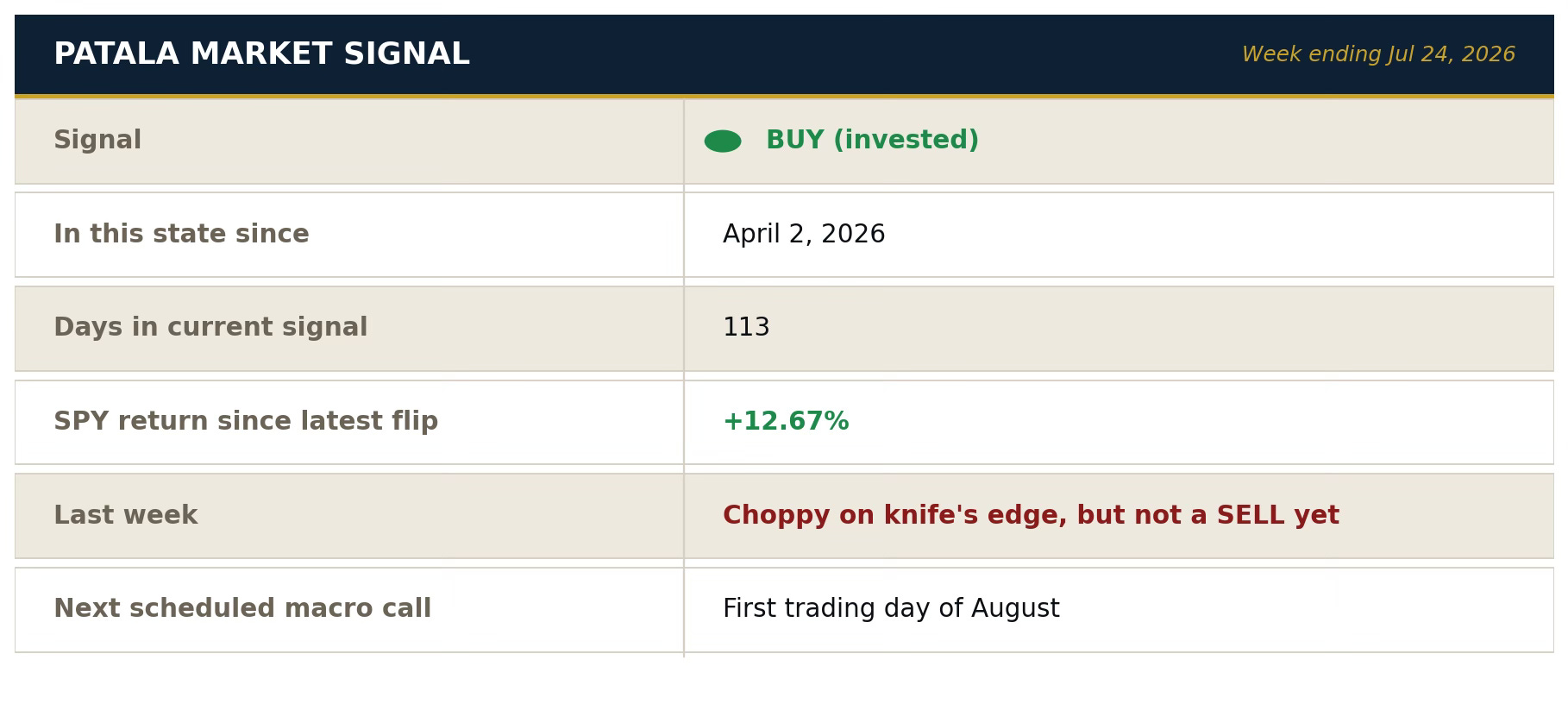
📡 Current signal: BUY — but on the brink
The Patala signal closed Friday still on a **BUY**, where it’s held since April 2, 2026 — 113 days. But this is the closest it has come to flipping in months.
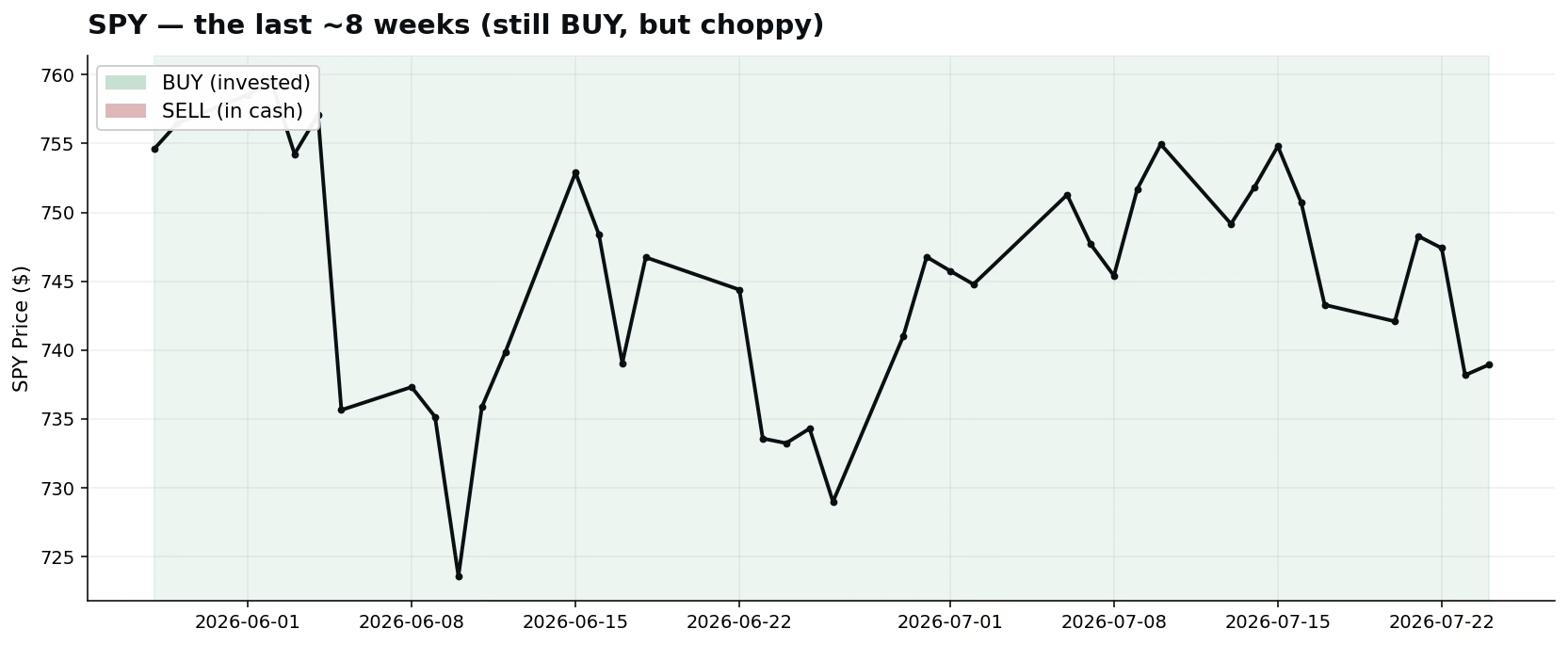
Here’s where the signal sits right now, up close — the last eight weeks. Still green, but you can see the turbulence building into Friday’s close:
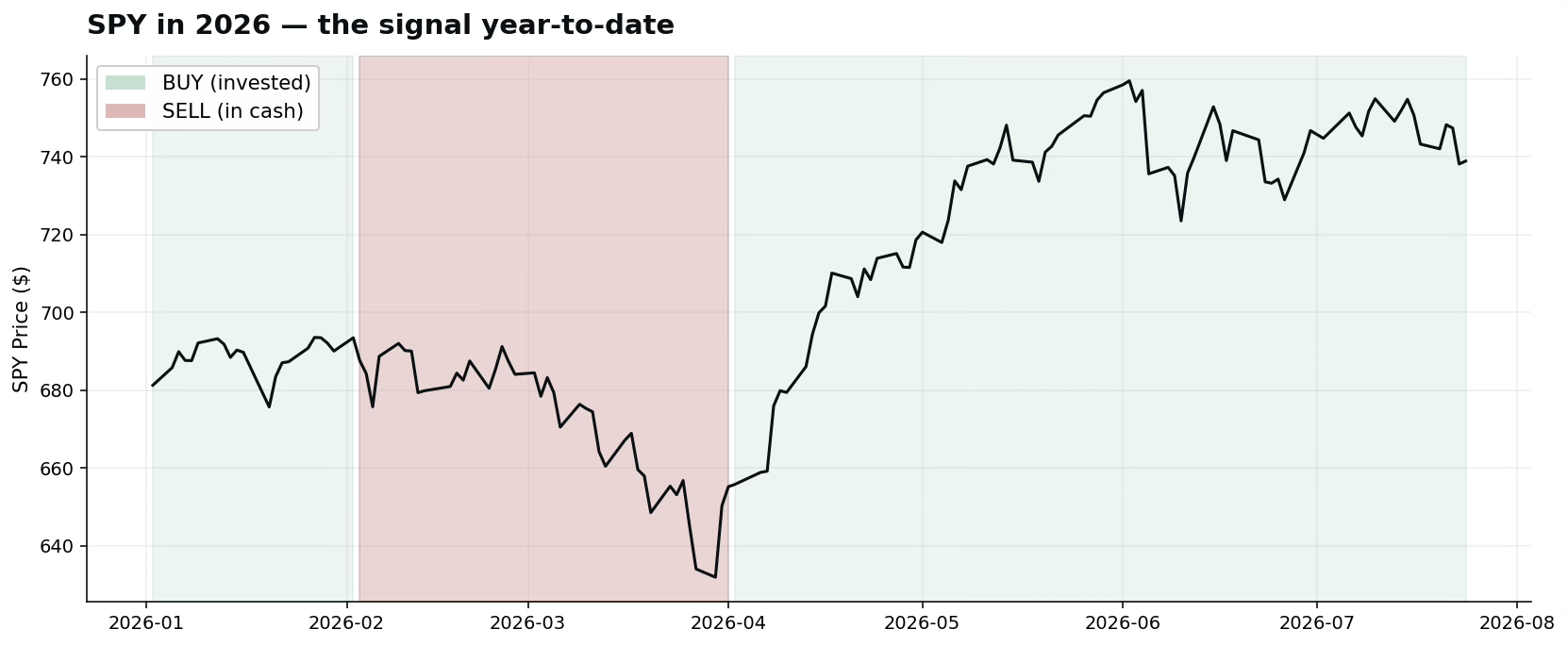
And zoomed out to the full year so far — the February SELL, the April re-entry, and the long BUY run since:
What happened last week?
It was a rough, choppy week, and the signal felt it. Two forces did most of the damage: rising oil prices put pressure across the board, and heavyweight earnings from Alphabet (GOOG), Tesla (TSLA), and Intel (INTC) injected sharp two-way volatility into the tape. SPY closed Friday at $738.93, down on the week, with several wide-range, heavy-volume sessions.
None of that, on its own, forces the signal out. Remember how the model is built: out of 158 daily zones, only 11 trigger a SELL. It’s designed to stay invested through exactly this kind of noise rather than flinch at every rough week. But the conditions last week pushed price close enough to those danger zones that the signal is now, genuinely, on the brink.
It did not flip. As of Friday’s close, the model is still **BUY** for Monday. But it’s the tightest it’s been in a while — and worth flagging honestly, in advance, rather than after the fact.
Guidance for the week ahead
Here’s where discipline matters more than opinion.
My guidance: Hold what you have, but don’t add new long positions here. The signal hasn’t flipped, so this isn’t a SELL — you’re not being told to move to cash. But with the model this close to the edge and the next scheduled macro call landing on the close of the first trading day of August, opening fresh longs into that uncertainty is taking on risk the system isn’t rewarding right now.
This is the hardest part of any rules-based system, and it’s worth saying plainly: This is not investment advice, and I’m not telling you what to do with your money. What I can tell you is what the discipline of the system itself calls for — wait for the signal, don’t front-run it, and don’t let a choppy week talk you into a trade the model hasn’t asked for. The entire 26-year edge of this approach comes from doing what the signal says and nothing more. The moment you start improvising around it, you’re running a different system — usually a worse one.
We’ll have the next macro signal on the first trading day of August. Until then: patience.
The bigger picture: what “in cash” actually bought you
Since last week put the signal on the edge of a SELL, it’s a good moment to zoom out and show what those red “in cash” periods have actually done over time.
Here’s the signal applied to SPY over the last 10 years. Green = Invested. Red = In Cash.
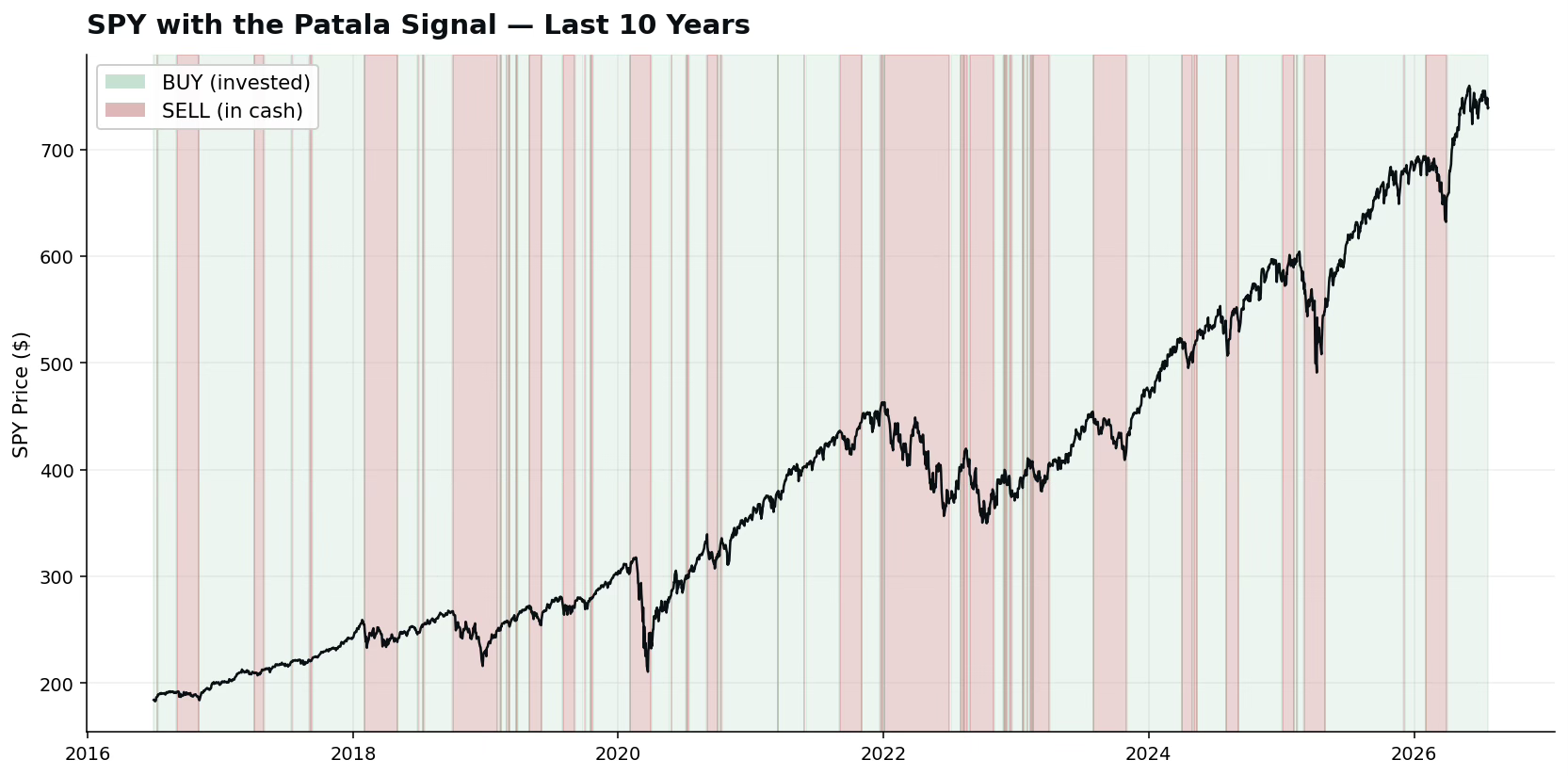
Notice where the red clusters: the 2020 COVID crash and the 2022 bear market. The signal didn’t predict either — it simply reacted to danger zones faster than a headline ever could, and stepped aside while the worst of the declines played out. That’s the entire game. Not calling tops. Just not being fully exposed when the floor drops.
The last 10 flips
For full transparency, here are the signal’s ten most recent flips — the dates, the direction, the SPY price at each, and how long each new signal lasted:
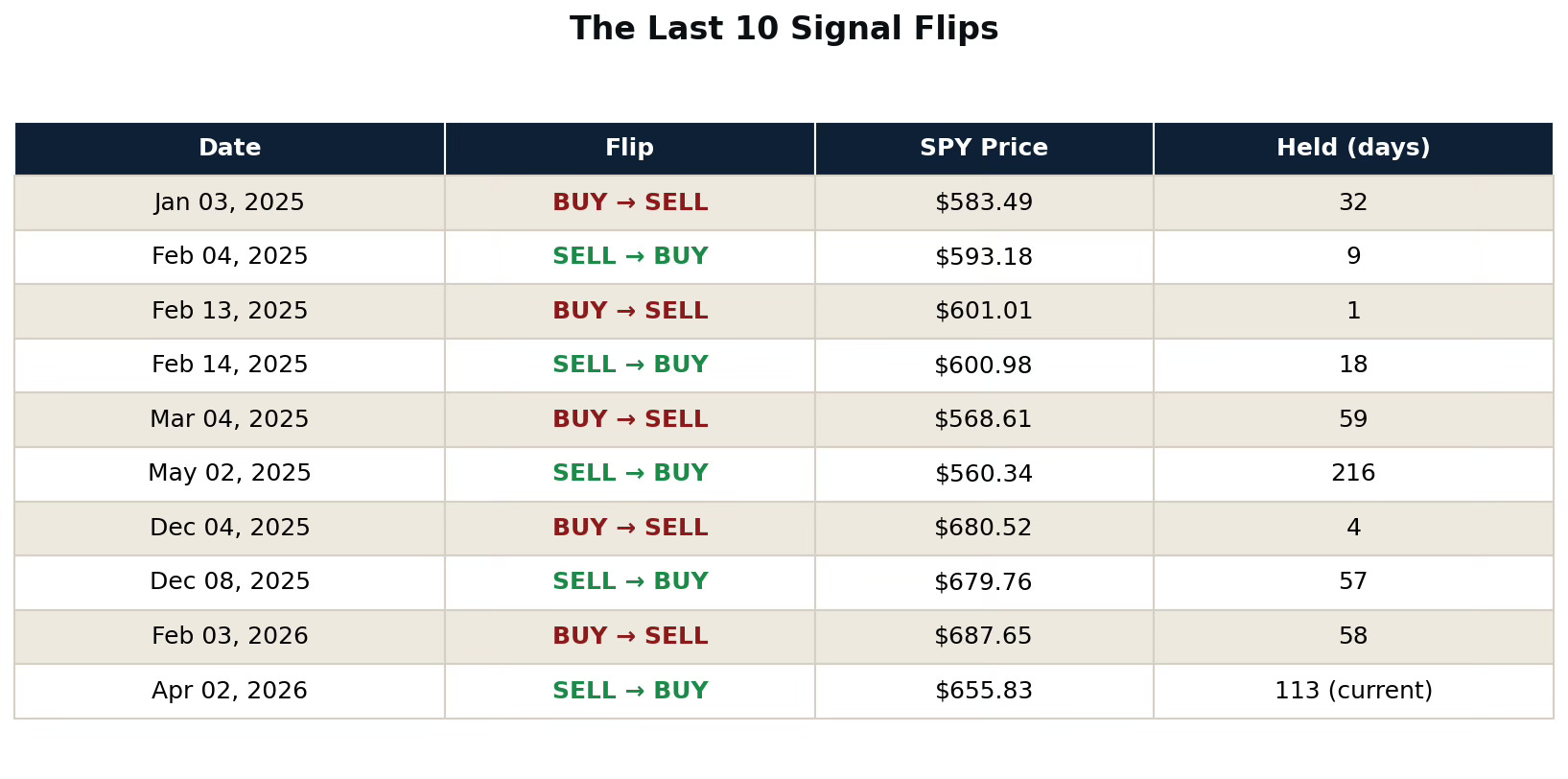
A few honest observations:
- Whipsaws happen. February 2025: a SELL on the 13th, a BUY the very next day. That’s a whipsaw, and it costs a little. Over 26 years the signal has flipped 308 times — roughly 11–12 a year — and a meaningful share reverse quickly. That’s the price of a system responsive enough to catch real crashes.
- The good runs are long. The May 2025 BUY held 216 days. The current BUY has held 113 and counting. The system spends most of its time invested; cash periods are the exception.
- Every flip is published. Wins and whipsaws both. That’s the deal.
Good Luck!
That Patala Portfolio
*This is not investment advice or a recommendation, and I am not a registered investment adviser. This publication is for informational and educational purposes only. The signal reflects a backtested and now live-tracked quantitative model; past performance, backtested or live, does not guarantee future results. Markets involve risk, including loss of capital. Consult a qualified financial adviser before investing. You are solely responsible for your own decisions.*