

Market digest: what moved this week
Treasury yields spiked midweek, and the move rippled through both stocks and bonds. Wall Street couldn’t fully agree on why — stubborn inflation, faster growth, or deficit concerns all got blamed — but the higher-for-longer repricing unsettled markets for a few sessions.
The Nasdaq hit a fresh record close on Tuesday (27,244.28, its first record close since June), driven by a rally in AI-linked stocks, before easing back to 27,068.72 by Friday as the yield spike caught up with tech.
Consumer sentiment fell to a multi-month low. The University of Michigan’s index dropped to 48.1 in September from 51.7 in August, with higher grocery and gas prices weighing on households’ outlook.
Oil prices swung, then eased. Crude gave back its midweek gains by Friday on supply-side optimism, which took some pressure off the inflation narrative into the close.
Stocks rallied into the weekend. The S&P 500 and Nasdaq each notched a weekly gain, and the Dow snapped a three-week losing streak with a strong Friday session.
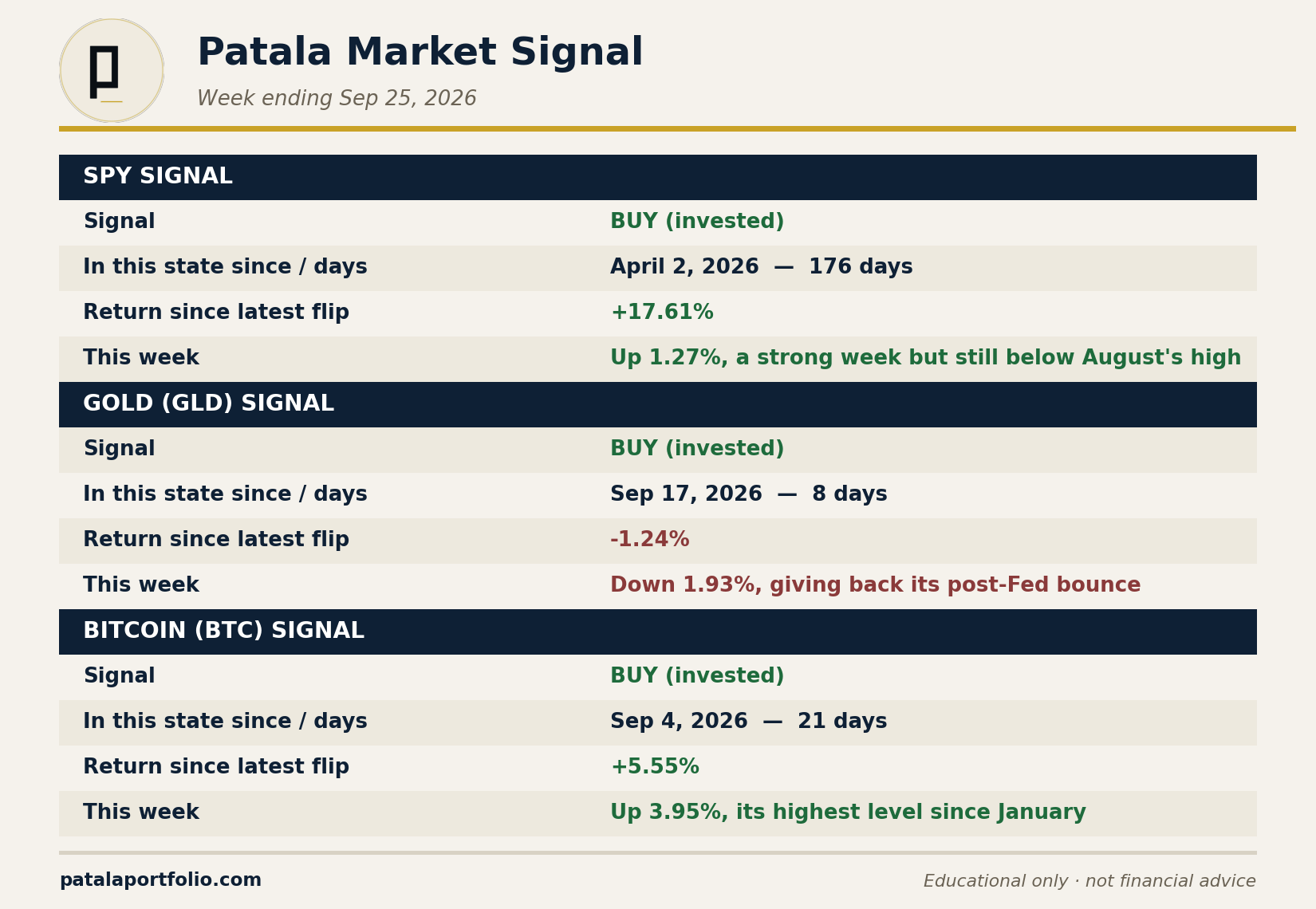
All three Patala signals held steady — no flips this week.
Net effect: SPY up 1.27% on the week. GLD down 1.93%. BTC up 3.95%, its highest level since January.
Never miss a Market Signal or Stock Recommendation. Subscribe Free For Limited Time
Where all three signals stand
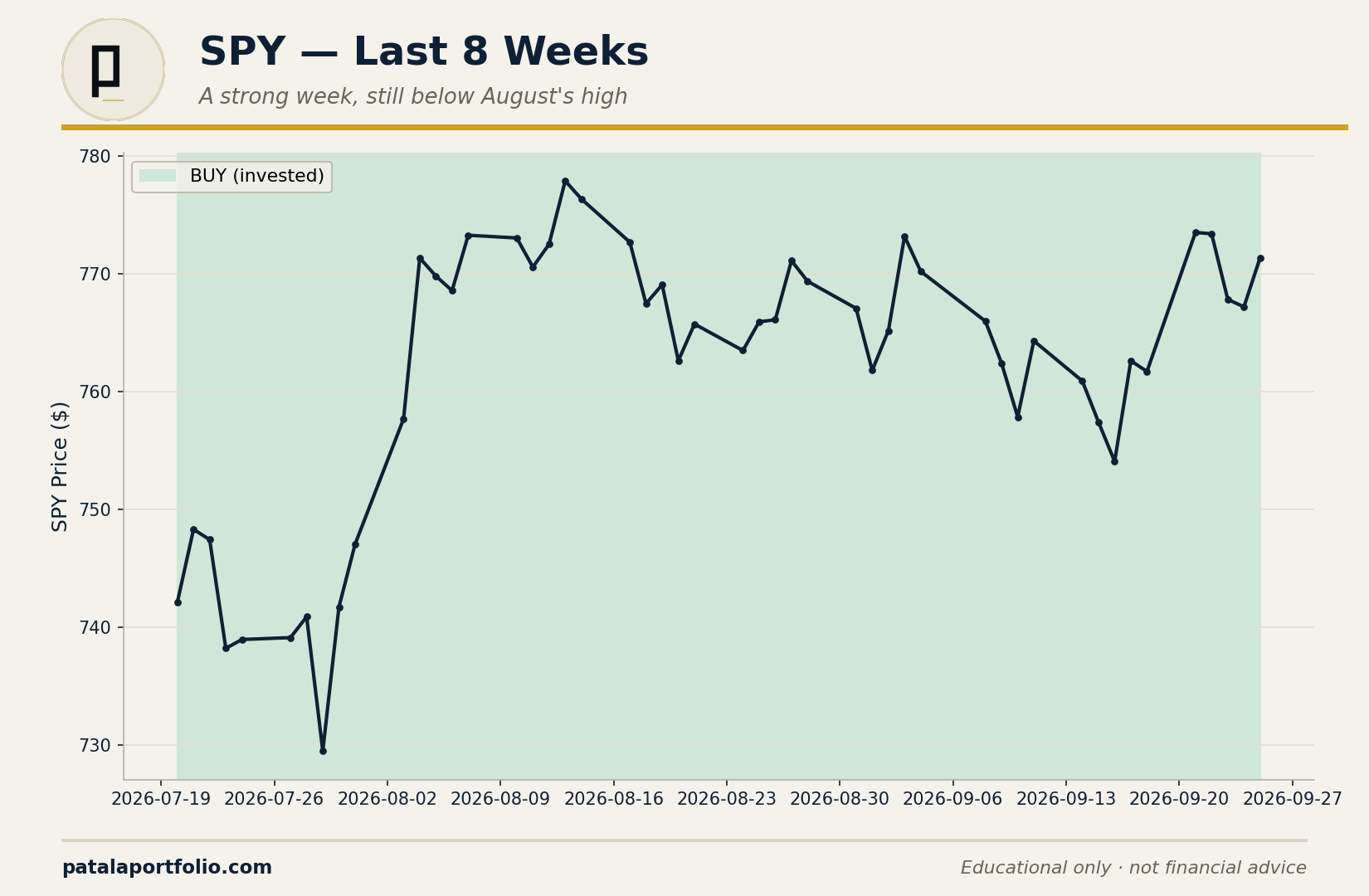
SPY: still a BUY, still holding since April 2 — 176 days now, up 17.61% since that flip. A volatile bond market didn’t shake the position loose, and SPY closed the week strong, though still shy of August’s high.
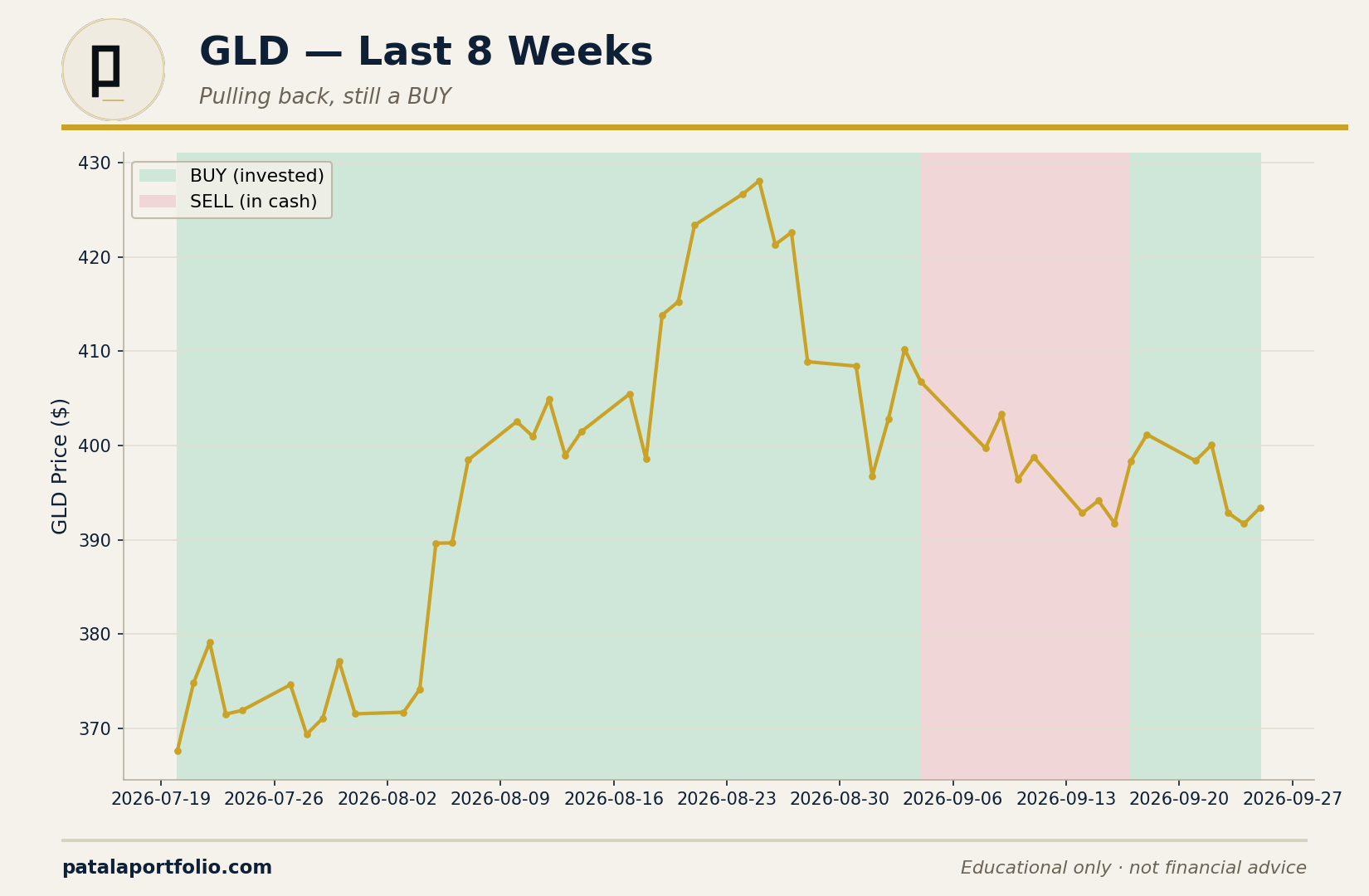
Gold: still a BUY, 8 days in and down 1.24% since flipping back on September 17. This week gave back part of the post-flip bounce.
Bitcoin: still a BUY, 21 days in and up 5.55% since the September 4 flip. This week’s rally pushed it to its highest close since January, well above the position’s entry price.
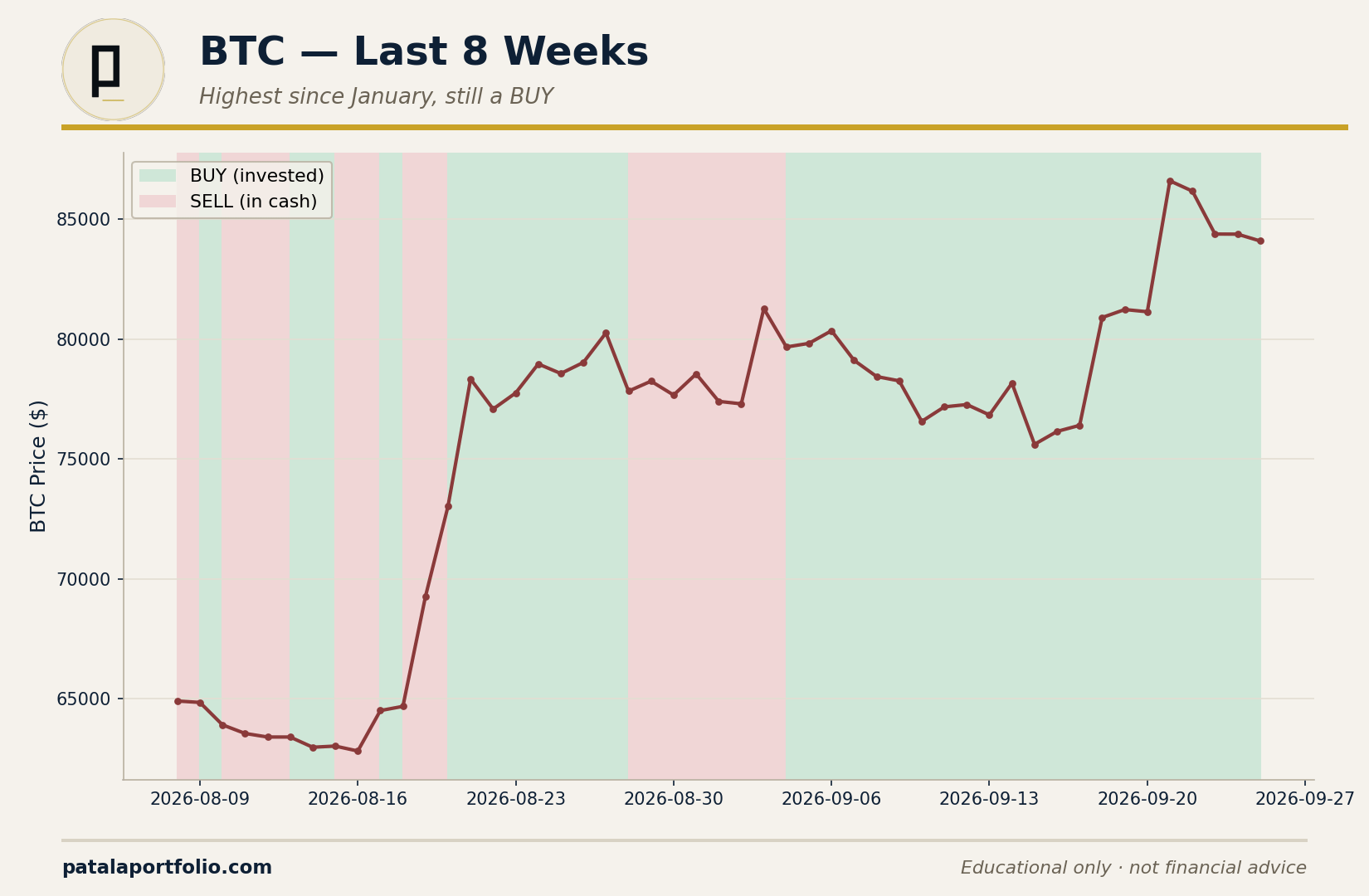
All three signals, side by side:
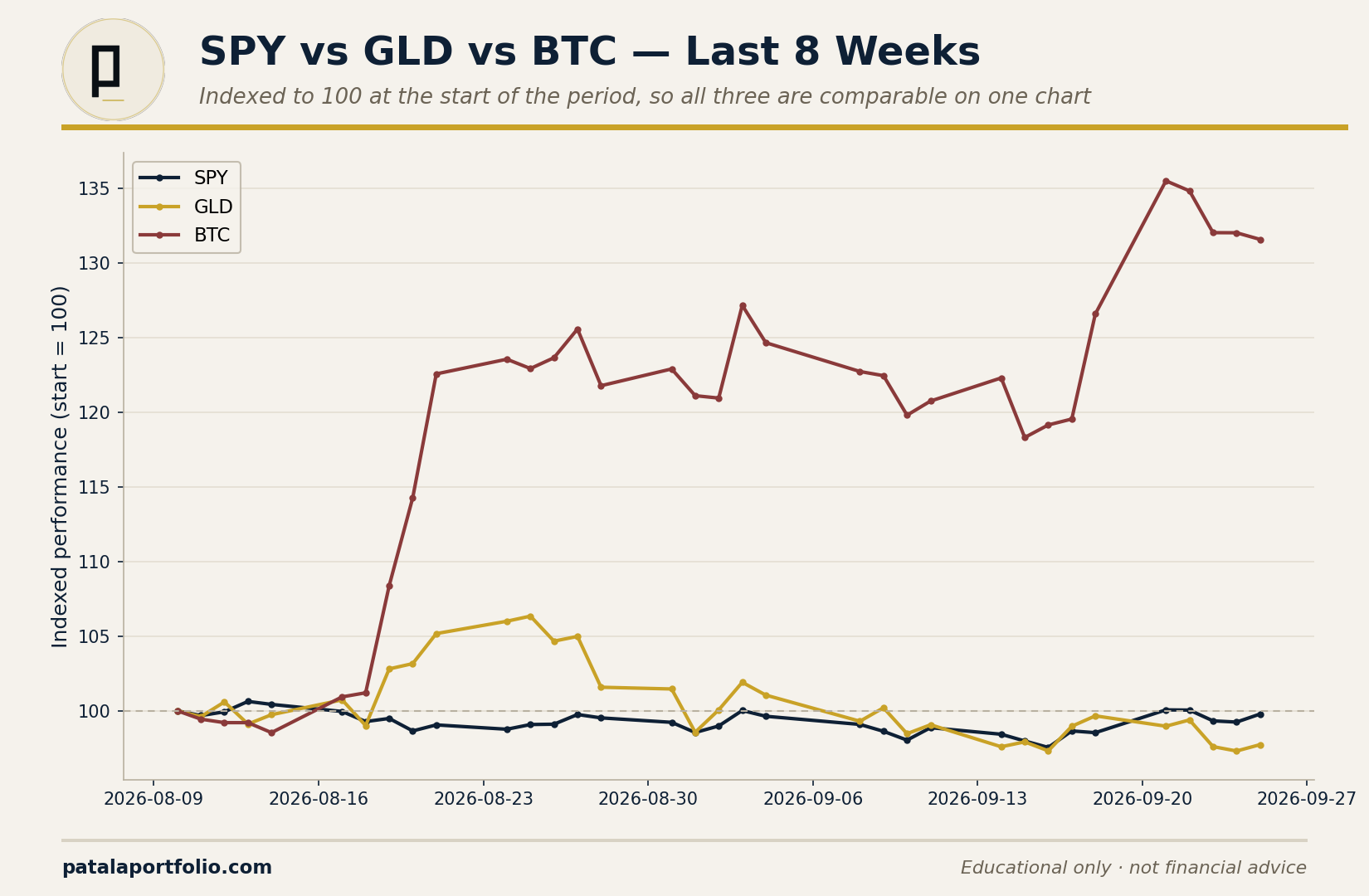
Same 8 weeks, indexed to the same starting point — Bitcoin’s climb this week pulled it further ahead of the other two.
The honest part on gold: the BUY that opened September 17 is down 1.24% eight days in. It’s a small, early loss on a position that’s barely had time to prove anything either way — worth noting, not worth reading into.
The honest part on Bitcoin: a bond-yield spike that rattled most of the market this week barely touched Bitcoin’s BUY, which is now up 5.55% and sitting at its best level since January. Markets that “should” have been risk-off by the mid-week playbook didn’t behave that way in this position.
Why a volatile week produced zero flips
A bond-market scare, a weak consumer sentiment print, and a swing in oil prices all hit in the same week, and none of it moved any of the three signals. That’s not the system ignoring real news — it’s the system doing exactly what it’s built to do, which is read price and nothing else. Some weeks that produces a flip. This week it produced three signals staying exactly where they were. Next scheduled update: Saturday, October 3, 6:00 AM ET.
As always: this is not investment advice, and I’m not telling you what to do with your money. What I can tell you is what the discipline of the system calls for — follow the signal, don’t front-run the next update, and don’t let a volatile week in bonds or oil pull you outside the plan.
Subscribe free for a limited time
Full transparency: every recent flip
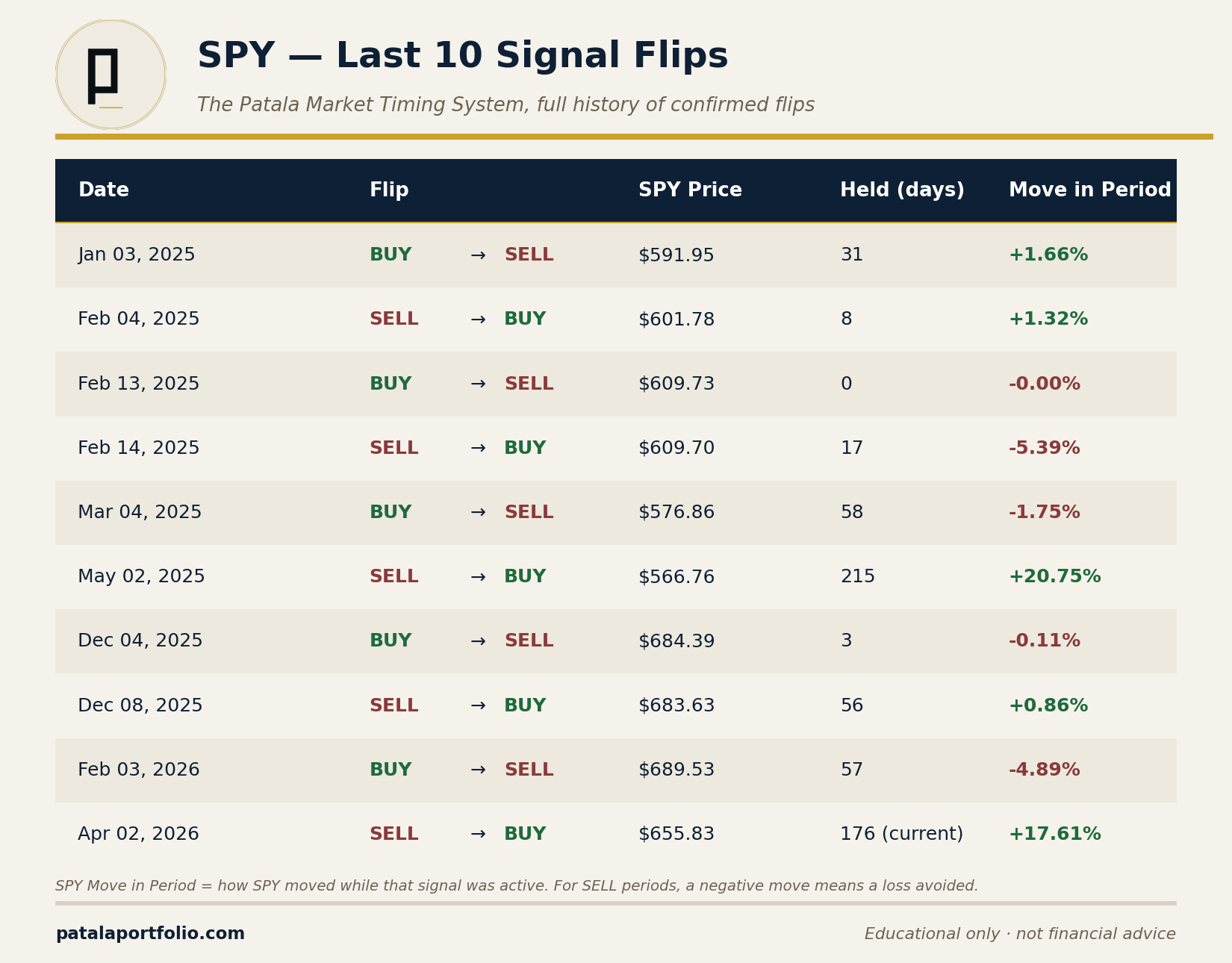
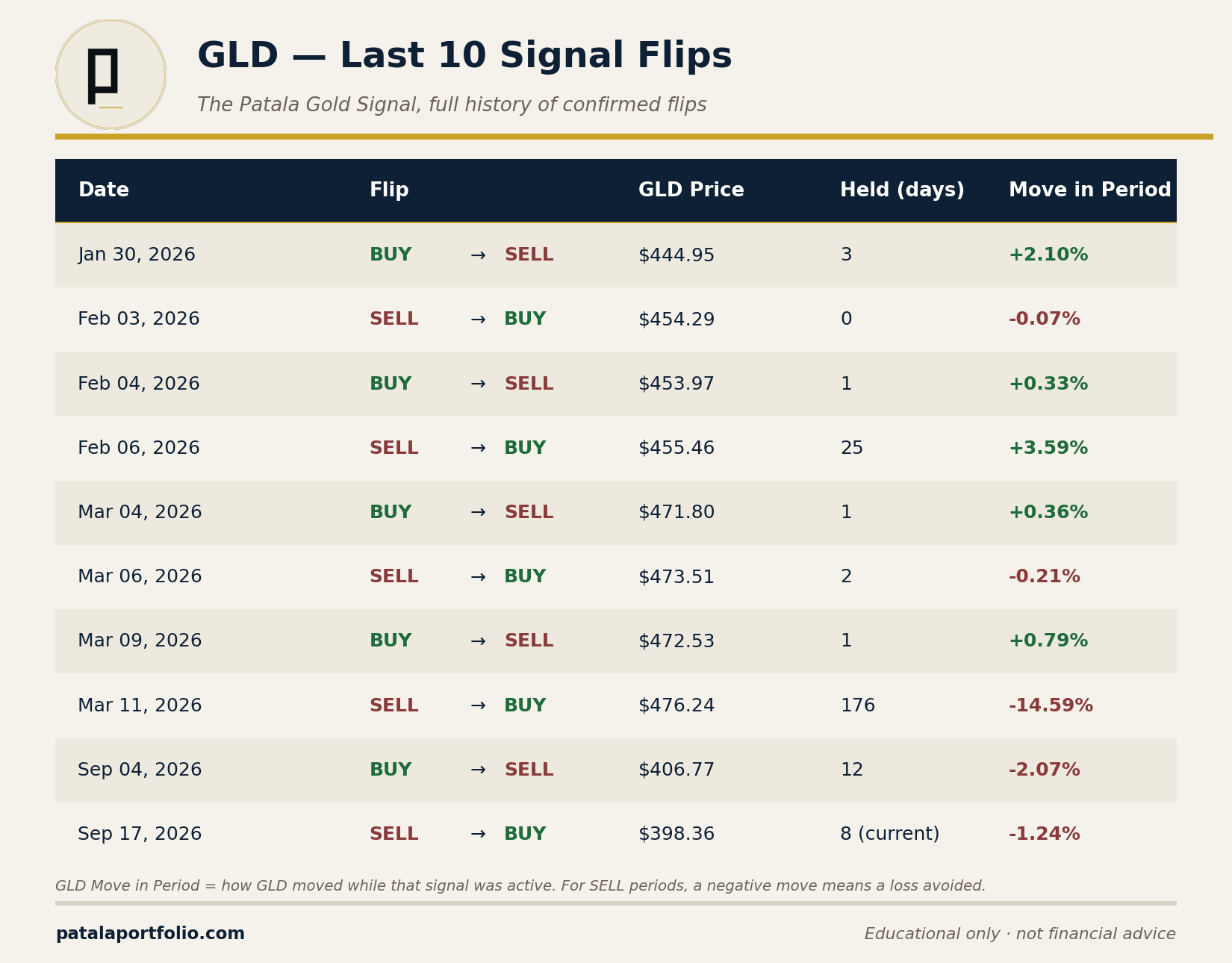
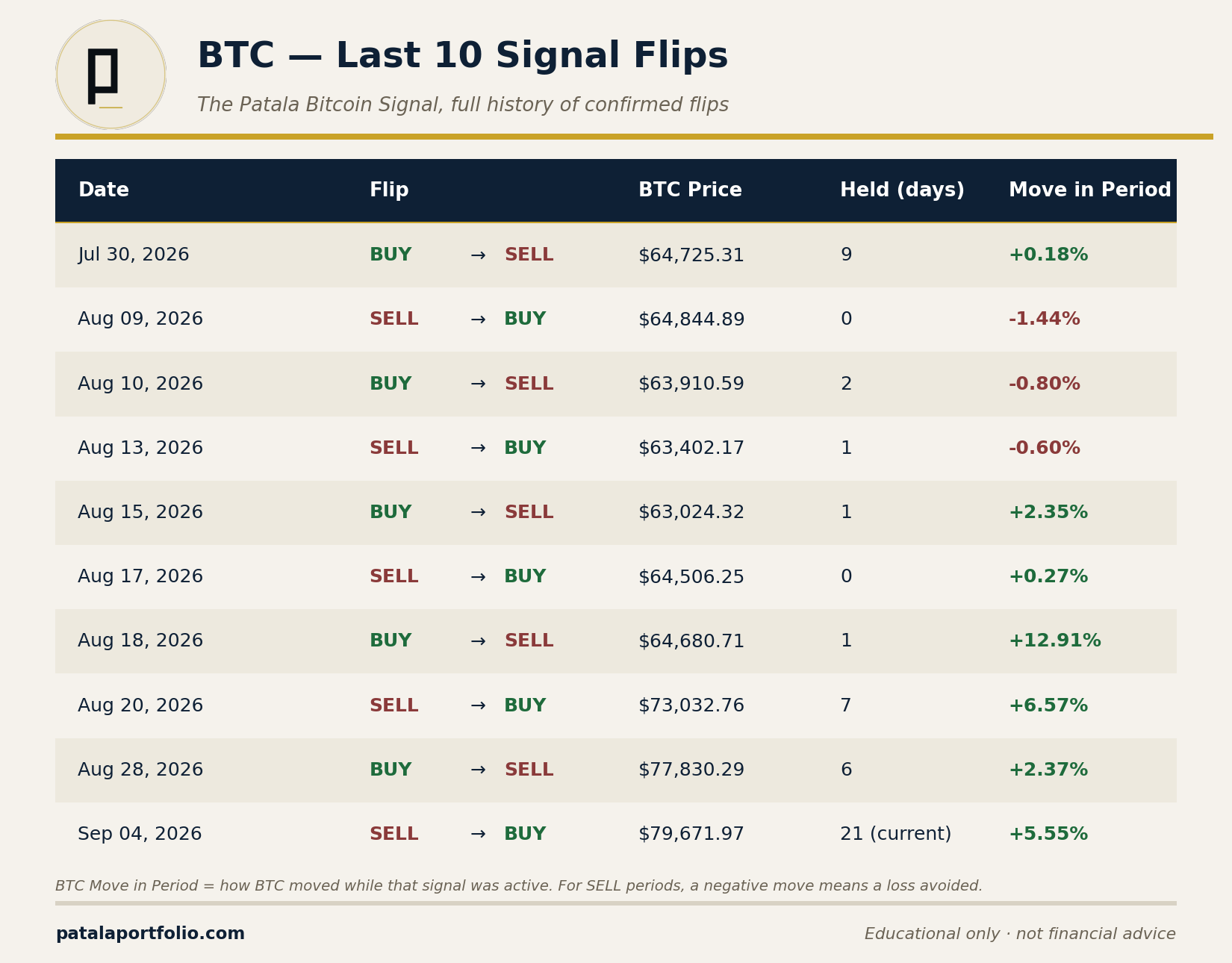
A couple of honest notes: SPY’s current BUY is up +17.61% (up from +16.14% last week — a strong week added to an already-long run). GLD’s BUY is now down to -1.24% (from +0.71% last week — the early bounce faded). BTC’s BUY is up to +5.55% (from +1.89% last week — this week’s rally did most of the work).
Why “no flips” is still worth reporting
A week with zero flips across all three signals isn’t a week with nothing to say — it’s a week where a real macro shock (the bond-yield spike) tested every position at once and none of them moved. That’s a more meaningful data point than it looks like at first glance: it means none of the three assets crossed a line that mattered, even during a stretch that rattled plenty of other things. The system doesn’t get credit for “doing nothing” the way it gets credit for a well-timed flip, but the discipline is identical either way.
A quick favor. If this issue was useful, please subscribe and share it with a friend who’d benefit from 20+ years of original systematic research. It genuinely helps. Thank you for reading.
Subscribe free to follow The Patala Live Portfolio
Disclaimer: This is not investment advice or a recommendation, and I am not a registered investment adviser. This publication is for informational and educational purposes only. The signals reflect backtested and now live-tracked quantitative models; past performance, backtested or live, does not guarantee future results. Cryptocurrency is especially volatile and involves risks distinct from traditional securities. Markets involve risk, including loss of capital. Consult a qualified financial adviser before investing. You are solely responsible for your own decisions.
Appreciate the complete transparency in publishing live. But looking at the numbers—+10.5% for the system versus +29.9% for buy-and-hold across these flips—really highlights the heavy drag of frequent trading.
Curious if stretching this to a weekly-based strategy would better filter out the chop, reduce turnover, and capture a cleaner trajectory without sacrificing performance.
When zooming out historically, do these shorter-duration signals actually outperform buy-and-hold over a full multi-year cycle, or does the trend-following tax on whipsaw days typically eat the alpha?