
Let’s start with a number that should stop you cold.
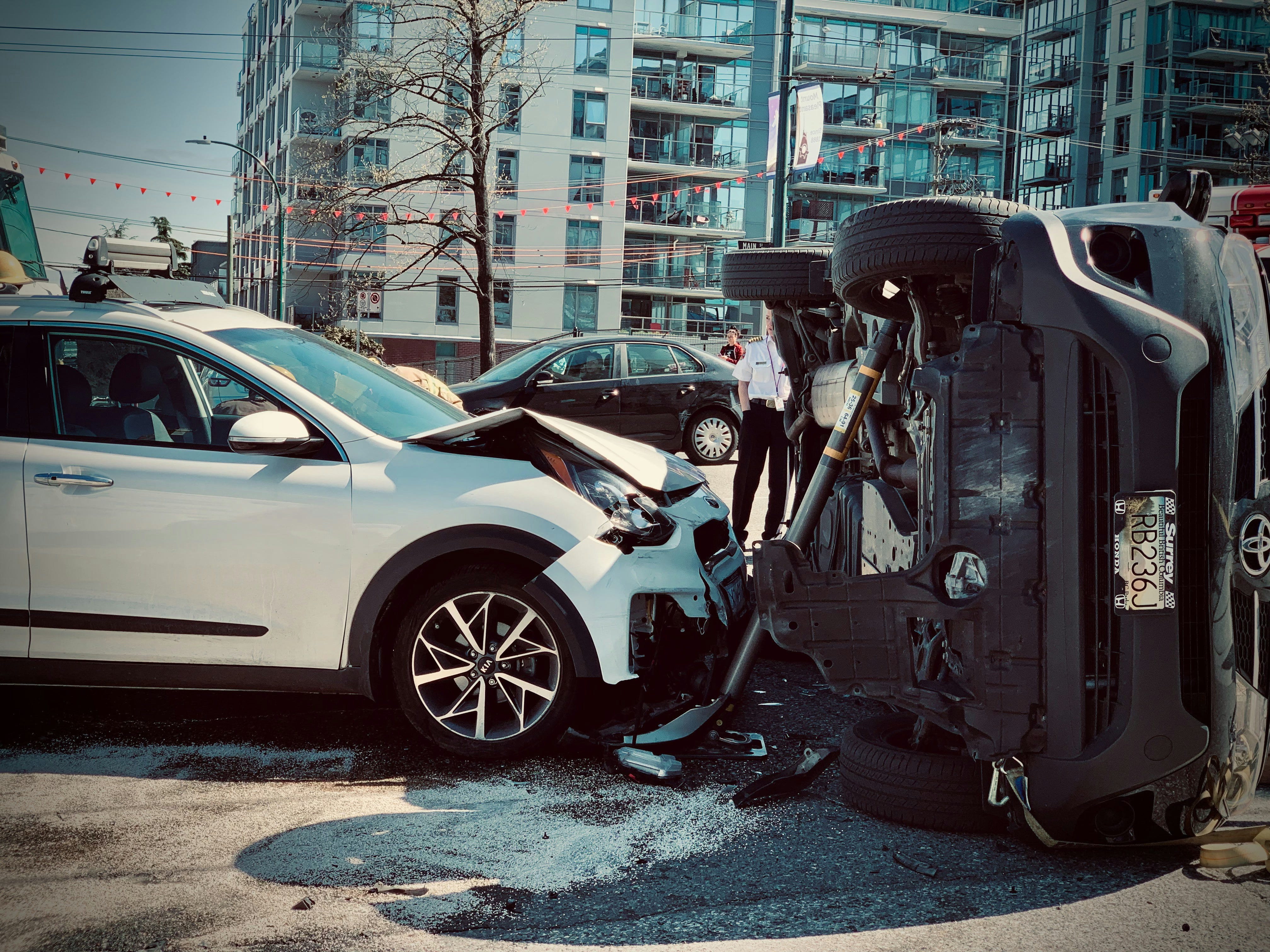
Image Credit: Photo by Anthony Maw on Unsplash
The “Magnificent Seven” — Nvidia, Apple, Microsoft, Alphabet, Amazon, Meta, Tesla — are now worth roughly $22 trillion combined, about a third of the entire S&P 500. Add the wider AI complex around them — the Broadcoms, the TSMCs, the Oracles, the data-center and power-infrastructure names whose valuations now lean on the AI story — and you’re looking at a bet worth north of $27 trillion.
Here’s the part that should really get your attention: through 2026, AI-related stocks have driven more than 80% of the S&P 500’s entire gain. Strip them out, and the index is up around 2% on the year.
That is the most concentrated bet on a single theme in the history of the U.S. market. Which makes it the most important question in investing today: what happens if it unwinds?
My honest view (and I could be wrong)
Let me tell you where I actually stand, because I’d rather give you a real opinion than hide behind a hedge.
I think this bull market has room to run a little further. My base case is that we get 10–15% drawdowns along the way — normal, healthy corrections — but not a dot-com-scale collapse. Not yet. Unlike the 2000 dot-coms, the biggest AI names are earnings-driven: the revenue and margins underneath them are real, and that changes the math on how and when this ends.
That’s my personal read. It is not the consensus, and it is absolutely not a guarantee. I’ve spent twenty years building quantitative systems precisely because opinions — mine included — are so often wrong. My market timing signal will tell me when the trend actually breaks, no matter what I believe right now.
But plenty of thoughtful investors are convinced this is a bubble on borrowed time. If that’s you, the rest of this post is for you.
The rotation nobody prepares for
Here’s the pattern worth understanding. When a dominant theme unwinds, capital rarely leaves the market — it rotates. It flows out of the crowded, expensive, momentum names and into the corners everyone ignored on the way up: defensives, value, cash generators trading at multiples that already price in gloom.
In a real AI unwind, the stocks best positioned aren’t the ones fighting the tide. They’re the ones with little AI exposure to begin with, trading at valuations low enough that there’s not much air left to come out.
So I put a specific question to my quantitative models: which stocks screen as most likely to weather an AI-driven storm — and rebound hardest once it passes? Five names came back. Not one of them is an AI stock.
The Patala Portfolio publishes a 26-year-backtested market timing signal and quant-selected stocks, all in the open.
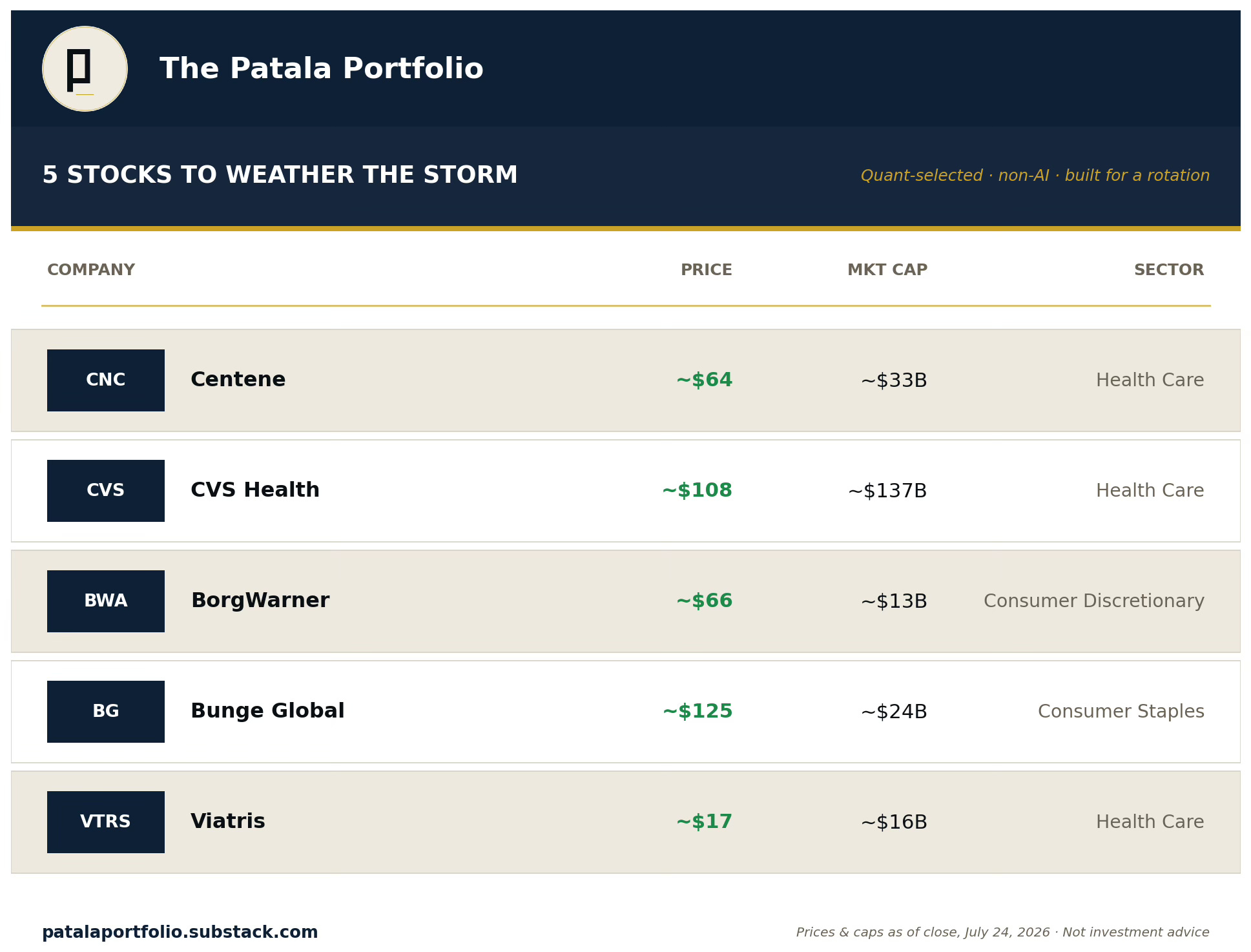
The 5 stocks built to weather the storm
Figures approximate, as of market close Friday, July 24 2026. These are quantitative screens illustrating a rotation thesis — not personalized recommendations. See the disclaimer below.
Centene Corp (CNC) — Health Care
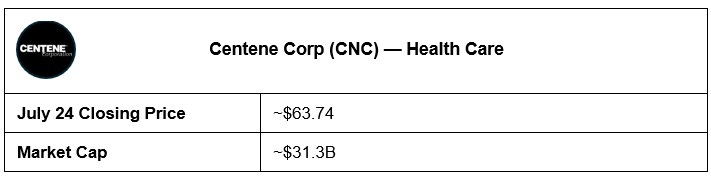
Centene is the largest Medicaid managed-care insurer in the U.S., also running Medicare Advantage, Part D, dual-eligible, and ACA Marketplace (Ambetter) plans. Its demand is driven by demographics and government policy — about as far from the AI trade as a large-cap gets.
The last twelve months were a rollercoaster: shares fell as much as ~60% in 2025 on cost deterioration across Medicaid, Medicare, and the Marketplace — then came roaring back. A big Q1 2026 earnings beat sent the stock up ~9% in a day and drove a series of guidance raises. It’s now up over 60% year-to-date in 2026, though still below year-ago levels given the depth of that drawdown. The next catalyst is the Q2 print due July 28. A low-multiple, defensive healthcare name mid-turnaround is exactly the profile that attracts inflows in a risk-off rotation.
Viatris Inc (VTRS) — Health Care
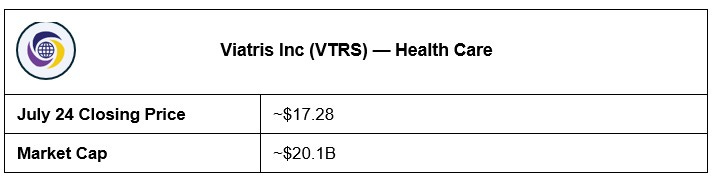
Viatris is the global generics-and-established-medicines maker formed from Mylan and Pfizer’s Upjohn unit, spanning branded drugs, complex generics, and biosimilars across four geographic segments. It’s a high-cash-flow, low-valuation pharma name that trades on its dividend and debt paydown far more than on growth.
Its 2025 was soft amid generic pricing pressure and divestitures, but the stock recovered off its 2025 lows on debt-refinancing activity and a Q1 2026 earnings beat, with FY26 guidance reaffirmed. It’s a deep-value pharma name — the kind of unloved, cash-generative stock money rotates toward when momentum breaks.
CVS Health Corp (CVS) — Health Care
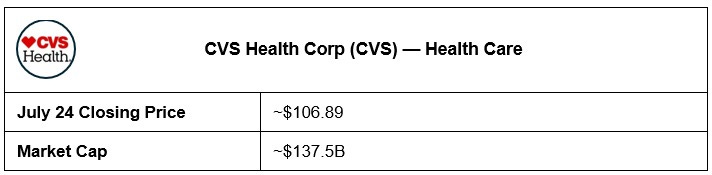
CVS is the integrated healthcare giant spanning Aetna (insurance), Caremark (pharmacy-benefit management), and ~9,000 retail pharmacies. Its revenue base is enormous, recurring, and almost entirely insulated from technology cycles.
It’s been one of the surprise performers of the year: up ~75% over the trailing twelve months, with roughly 40% of that gain in the most recent quarter alone, powered by a strong Q1 2026 beat, raised guidance, and improving Aetna margins. S&P Global revised its outlook to Stable from Negative on improved leverage. With a GLP-1 program expansion, a 56-year dividend streak, and earnings due Aug 5, it’s a defensive heavyweight that’s already proving it holds up — the kind of name that does well when high-flyers roll over.
BorgWarner Inc (BWA) — Consumer Discretionary
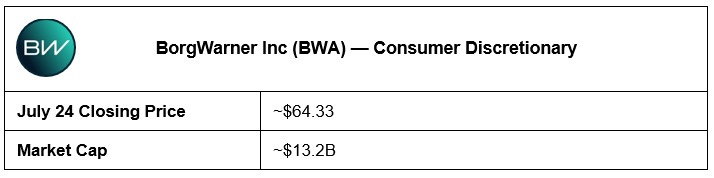
BorgWarner is an auto-parts and propulsion supplier — turbocharging, thermal, and drivetrain systems across combustion, hybrid, and EV platforms — increasingly diversifying into data-center power and industrial applications. It’s the one cyclical name in this group, and it earns its place on valuation and momentum rather than pure defense.
The stock is up roughly 80%+ over the past year, among the strongest in this set, on consistent earnings beats, new business wins in China and Europe, and analyst upgrades tied to its data-center diversification story. Some valuation models flag it as extended here — worth noting honestly — but an industrial with a non-AI growth angle is a classic rotation winner.
Bunge Global SA (BG) — Consumer Staples
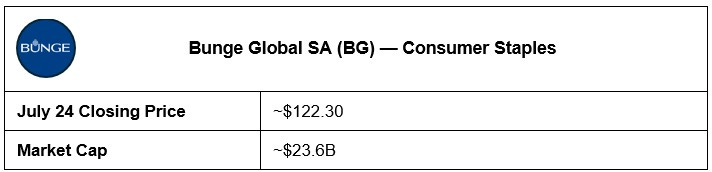
Bunge is one of the world’s largest agribusinesses — buying, storing, moving, and processing soybeans, corn, wheat, and oilseeds into food, feed, and biofuel across 50+ countries. Its business is tied to global food demand, harvests, and commodity cycles: about as uncorrelated to AI as a stock can be.
Shares are up roughly 59% over the past year, supported by the July 2025 close of the transformative Viterra acquisition, integration synergies, and strong demand for vegetable oils and protein meals (helped by biofuel and sustainable-aviation-fuel policy). Be clear-eyed about the risks: net margins are thin, and the most recent quarter’s revenue came in light, with the next report due July 29 under scrutiny on Viterra execution. But a staples-adjacent commodity processor is a textbook defensive holding when growth stocks wobble.


The common thread
Look at what these five share: low forward valuations, defensive or non-tech revenue, and essentially zero dependence on the AI narrative. Healthcare, auto parts, agribusiness. Boring, in the best possible way.
That’s the entire point. In a genuine AI unwind, boring is what outperforms. These aren’t the stocks that lead the next bull market — they’re the ones designed to protect capital and rebound while the market finds its feet. Notice, too, that four of the five are already outperforming this year, well before any unwind. That’s what a real rotation candidate looks like: strength that doesn’t depend on the AI trade continuing.
To be clear about my own position one more time: I don’t think that unwind is imminent. But the whole discipline of investing is being prepared for the scenario you don’t expect. If the $27 trillion bet breaks, these five are where my models say the shelter is.
What’s coming next
Starting the first week of August, I’ll begin publishing my quant model’s highest-potential stocks — two every Monday — alongside the weekly market timing signal. Today’s five are a preview of the kind of screening behind them.
Disclaimer: I am not a registered investment adviser, and nothing in this post is personalized investment advice, a recommendation to buy or sell any security, or an offer of advisory services. This publication is for informational and educational purposes only. The five stocks discussed were surfaced by a quantitative screen and are presented to illustrate a rotation thesis — not as a solicitation to trade them. Financial figures are approximate, reflect trading data as of late July 2026, are believed accurate as of publication but not guaranteed, and should be independently verified before acting. Individual stocks carry substantial risk, including total loss of capital. Past performance and backtested results do not guarantee future results. Consult a qualified financial adviser before investing. You are solely responsible for your own decisions.